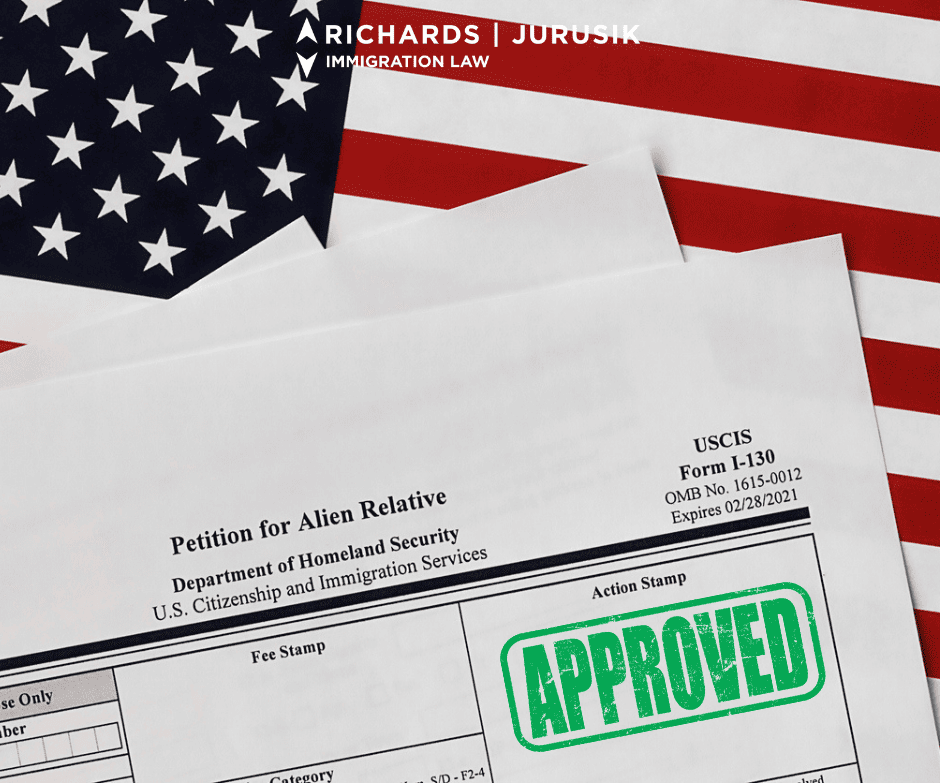
If your Form I-130, Petition for Alien Relative, has been approved and sent to the National Visa Center (NVC) for consular processing, you may be wondering whether you can still apply for a green card from inside the United States. The good news is that having your I-130 transferred to the NVC does not automatically mean you must complete consular processing. However, recent USCIS policy changes make it especially important to evaluate your options before deciding how to proceed.
Can I Switch From Consular Processing to Adjustment of Status?
Potentially. If you are physically present in the United States and meet the eligibility requirements for adjustment of status, you may be able to pursue your green card through Form I-485 without leaving the country.
Generally, adjustment of status requires that you:
- Were inspected and admitted or paroled into the United States, unless an exception applies;
- Have an approved immigrant petition, such as Form I-130;
- Have an immigrant visa immediately available, if applicable;
- Are admissible to the United States or qualify for an applicable waiver; and
- Are otherwise eligible to adjust status under U.S. immigration law.
Certain individuals, including immediate relatives of U.S. citizens, may qualify for exceptions to some adjustment of status restrictions. However, eligibility alone may not be enough.
How Does the May 2026 USCIS Policy Memo Affect Adjustment of Status Today?
On May 21, 2026, USCIS issued Policy Memorandum PM-602-0199, significantly changing how adjustment of status applications are to be evaluated.
The memorandum emphasizes that adjustment of status is an extraordinary form of discretionary relief and is not intended to replace the ordinary consular processing system. USCIS has directed officers to consider, on a case-by-case basis, whether an applicant deserves the favorable exercise of discretion to obtain permanent residence from within the United States rather than completing the immigrant visa process abroad.
In evaluating an adjustment of status application, officers are instructed to consider various factors, including:
- Whether the applicant has maintained lawful immigration status;
- Whether the applicant has violated the terms of a prior visa or period of parole;
- Whether the applicant has engaged in fraud or misrepresentation;
- Whether the applicant’s conduct after entering the United States was consistent with the purpose of their admission; and
- Whether the applicant could have pursued the ordinary consular processing route instead.
The memorandum does not eliminate adjustment of status or change the statutory eligibility requirements. However, it signals a more restrictive approach to discretionary approvals. Even applicants who meet the technical eligibility requirements may face additional scrutiny.
As a result, individuals considering switching from consular processing to adjustment of status should carefully evaluate the potential risks under this new guidance before filing Form I-485.
Important: Keep Your Consular Case Active
If you are considering switching to adjustment of status, do not simply stop communicating with the NVC or the U.S. consulate.
Under INA § 203(g), an immigrant visa registration may be terminated if an applicant fails to pursue the immigrant visa application within one year after receiving notice that a visa is available. Losing track of your consular case could jeopardize the approved petition and the benefits associated with it, including your priority date.
Therefore, while exploring adjustment of status, it is important to remain in contact with the NVC or consulate, respond to notices, and take appropriate steps to keep your immigrant visa case active until you have confirmed the appropriate course of action.
What If I Want to Switch From Adjustment of Status to Consular Processing Instead?
If you initially intended to adjust your status in the United States but later decide to complete the green card process through a U.S. embassy or consulate abroad, you will need to file Form I-824, Application for Action on an Approved Application or Petition.
Form I-824 allows you to request that USCIS notify the National Visa Center of an approved immigrant petition so that consular processing can begin. If you are considering changing from adjustment of status to consular processing, it is important to understand the timing and procedural requirements. An immigration attorney can help determine the appropriate steps to transition between the two processes without unnecessarily jeopardizing your case.
Schedule a Consultation with an Immigration Lawyer
We Can Help
If you have questions about an approved Form I-130 sent to the National Visa Center, switching from consular processing to adjustment of status, Form I-485 eligibility, USCIS discretionary requirements, or Form I-824, contact Richards and Jurusik for detailed guidance and assistance. Our immigration lawyers have decades of experience helping individuals and families navigate family-based green card applications, adjustment of status, and consular processing. We can help you evaluate your eligibility, understand potential risks, and determine the appropriate next steps without unnecessarily jeopardizing your immigration case. Read some of our hundreds of five-star client reviews, or contact us today to discuss your immigration needs. Please read some of our hundreds of 5-star client reviews! Contact us today to assess your legal situation.

BRANDON BEASLEY is a Associate Attorney at Richards and Jurusik who focuses his practice exclusively on U.S. and Canadian immigration law. He advises individuals, families, professionals, and businesses on employment-, investment-, and family-based immigration matters, while also assisting U.S. citizens with Canadian criminal inadmissibility, Temporary Resident Permits, and Criminal Rehabilitation applications. (Full Bio)