
The immigration lawyers at Richards and Jurusik have decades of combined experience helping Canadians to live and work in the US. Due to our proximity to Canada, we have developed a unique practice catering to the needs of Canadian citizens seeking the opportunity to work and live in the United States.
 Richards and Jurusik Immigration Lawyers
- I’m extremely grateful to this legal team for their outstanding help with my inadmissibility case to Canada due to a DWI. From the very beginning, they were knowledgeable, responsive, and transparent about the process. They clearly explained … More my options, handled all the paperwork with great attention to detail, and guided me every step of the way. Thanks to their expertise and professionalism, my case was handled smoothly and successfully. I highly recommend them to anyone dealing with Canadian immigration inadmissibility issues.


If you are a Canadian looking for representation to work and live in the United States, choose an Immigration Lawyer with specific experience working with Canadians. Canadian citizens enjoy the ability to travel to the United States under the USMCA (NAFTA) and visa-exempt status for temporary time periods as visitors. In many cases, Canadian citizens are involved in activities within the United States that require additional immigration status.
There are very few immigration law firms that can match our specific experience in handling immigration law matters for Canadians. We know how to help Canadians live and work in the United States. If you are Canadian, take advantage of our specific expertise in immigration law for Canadians.
Temporary Work Visas for Canadians
In order to work legally in the United States, Canadians must first obtain work authorization. The United States has several different nonimmigrant visa classifications for Canadian temporary workers, through which the spouse and children who qualify as dependents are also able to obtain dependant visas.
TN Visas for NAFTA Professionals
Canadian citizens benefit from the United States Canada Mexico Agreement (USCMA), formerly NAFTA. Under the USCMA, Canadian citizens that work as professionals in any of the 63 USMCA professions and meet the minimum qualifications are able to obtain TN Visa status to work in the United States.
Download Our TN Visas Guide
Get our FREE comprehensive guide on TN Visas, which details requirements and qualifications for TN Visa status, the application process, maintenance of TN Visa status, TD Visas for dependents, common questions and issues, and tips for success.
E-1 Visas for Canadians Engaged in Trade with the US
Canadian businesses that conduct substantial trade with the United States are able to obtain an E-1 registration for their business that enables them to send qualifying employees to the United States on E-1 Visas.
E-2 Visas for Canadians with Investments in the US
Canadian citizens and businesses with substantial investments in the United States are able to obtain an E-2 registration for their business that enables them to send qualifying employees to the United States on E-2 Visas.
H-1B Visas for Specialty Occupations, DOD Cooperative Research & Development Project Workers, and Fashion Models
Canadians who wish to perform services in a specialty occupation, services of exceptional merit and ability relating to a Department of Defense (DOD) cooperative research and development project, or services as a fashion model of distinguished merit or ability, can apply for the H-1B Visa.
L-1 Visas for Business Expansion into the United States
Canadian businesses that are looking to expand their footprint into the United States can do so under the L-1 Visa for Intracompany Transfers. The L-1 Visa allows for the start-up of a new business and the transfer of qualifying employees to the United States to establish, set up, manage, run, and/or work in the new office.
O-1 Visas for Individuals with Extraordinary Ability
Canadians who possess extraordinary ability in the sciences, arts, education, business, or athletics, or who have a demonstrated record of extraordinary achievement in the motion picture or television industry and has been recognized nationally or internationally for those achievements, can apply for an O-1 Visa.
Other Temporary Work Visas
We also help Canadians with all other relevant temporary work visas, including:
- H-2A Visas for Temporary Agricultural Workers
- H-2B Visas for Temporary Non-Agricultural Workers
- H-3 Visas for Nonimmigrant Trainees or Special Education Exchange Visitors
- I Visas for Representatives of Foreign Media
- P-1A Visas for Athletes
- P-1B Visas for Members of an Internationally Recognized Entertainment Group
- P-2 Visas for Individual Performers or Part of a Group Entering to Perform Under a Reciprocal Exchange Program
- P-3 Visas for Artists or Entertainers Coming to Be Part of a Culturally Unique Program
- R-1 Visas for Nonimmigrant Religious Workers
Our Resources for Temporary Work Visas
My TN Was Denied at the Border. Can I Return to the U.S. as a Visitor to Collect My Belongings?

New U.S. Social Media Vetting Could Create Serious Problems for Some Canadian TN Professionals

Can E-3 Visa Holders Start a Business in the United States?
Green Cards for Canadians
Green Cards through Employment
If you’re a Canadian looking to live and work in the United States as a permanent resident, we can help.
A permanent resident is someone who has been granted authorization to live and work in the United States on a permanent basis. As proof of that status, a person is granted a permanent resident card, commonly called a “green card.” Take a look at the possible paths to permanent residence through employment for Canadians.
Our Resources for Green Cards through Employment
Someone Previously Petitioned for Me Years Ago – Can I Adjust Status Under 245(i)?
My Visa Expired While My Adjustment of Status Is Pending: Can I Still Travel?
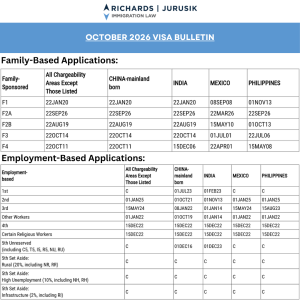
October 2026 Visa Bulletin: Key Employment and Family-Based Immigration Updates
US Family Sponsorship
The US immigration system allows for the sponsorship of certain qualifying immediate family members of US citizens and US permanent residents.
Green Cards for Spouses
If you are a Canadian citizen married to a US citizen, they can petition on your behalf for a green card and permanent residence.
Green Cards for Family
If you are a Canadian citizen and a qualifying family member of a US citizen or permanent resident, they can petition on your behalf for permanent residence.
K-1 Visas for Fiancés or Fiancées
If you are a Canadian citizen engaged to a US citizen, your fiancé or fiancée can petition on your behalf to obtain a K-1 Visa to enter the US for the purpose of marriage.
Our Resources for Family-based Immigration
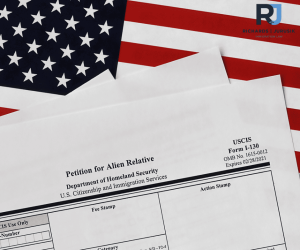
My I-130 Petition Was Sent to the Overseas US Consulate, but Now I Want to Adjust Status in the United States. Do I Have to Consular Process?
Someone Previously Petitioned for Me Years Ago – Can I Adjust Status Under 245(i)?

From TN Status to an Approved Marriage-Based Green Card
Immigrant & Non-immigrant Visa (NIV) Waivers
Are you a Canadian immigrant or non-immigrant that has been found to be inadmissible to the United States? We can help.
There are times when persons are found to be inadmissible to the United States for previous criminal arrests, misrepresentation, or fraud (among other reasons). The immigration laws allow for waivers of those inadmissibilities for both immigrant and non-immigrant reasons.
For persons that may only be seeking to enter the United States for a temporary non-immigrant purpose such as to visit, study, or work, their prior history may prevent them from being admitted into the United States. If you have been refused entry to the United States and have been found inadmissible, you might need a waiver.
Our Resources for Waivers
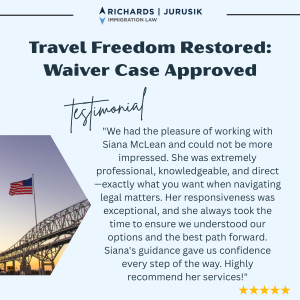
Travel Freedom Restored: Waiver Case Approved

What Is “Extreme Hardship” for an I-601 Waiver?

Inadmissibility to the U.S. and What Waivers Are Required
Deportation & Removal Defense
Are you a Canadian facing removal or deportation from the United States? We can help.
Removal defense (formerly called “deportation defense”) involves representing and advocating for immigrants facing removal or deportation from the United States.
For many immigrants, the process involves appearing before an immigration judge in immigration court. While most immigrants cannot afford to have an attorney represent them in court, legal representation is sadly the single most important factor in determining whether someone will win—or lose—their case.
US Citizenship & Naturalization for Canadians
Are you a Canadian looking to become a US citizen? We can help.
Contact Richards and Jurusik Immigration Law today if you have questions about your eligibility for naturalization, or you are in need of assistance with the naturalization process. We routinely help US permanent residents apply for US citizenship—even attending interviews with our clients.
Do I qualify for US Citizenship?
Find out whether you meet the requirements to apply for US citizenship.
How do I apply for US citizenship?
Learn about USCIS Form N-400, which is used to apply for US citizenship through naturalization.
Can you help me apply for US citizenship?
Richards and Jurusik have extensive experience helping Canadians apply for US citizenship.
Our Resources for US Citizenship
From Dred Scott to Birthright Citizenship: Understanding the Constitutional Connection
Supreme Court Upholds Birthright Citizenship and Rejects Trump’s Proposed Restrictions
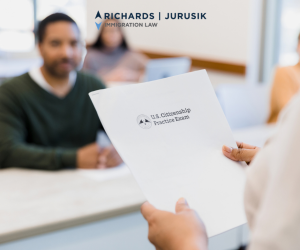
What Happens If You Fail the U.S. Citizenship Test?
Affirmative Asylum
Are you a Canadian looking to apply for asylum in the United States? We can help.
Many people around the world have to flee their countries of birth due to being targeted because of their race, nationality, political opinion, or being a part of a particular group of people.
If you are in the United States, you can apply for protection in the form of an application for affirmative asylum.
Board of Immigration Appeals
Are you a Canadian seeking assistance with your Board of Immigration Appeals case? We can help.
The Board of Immigration Appeals (BIA or Board) is the highest administrative body for interpreting and applying United States immigration laws.
In general, the BIA reviews appeals from certain decisions that Immigration Judges and district directors of the Department of Homeland Security (DHS) issue, ensuring that the immigration laws receive a fair and uniform application. Filing an appeal with the Board of Immigration Appeals (BIA) is a crucial step for many noncitizens facing removal because it is the last opportunity to obtain a favorable decision from the Executive Office for Immigration Review.