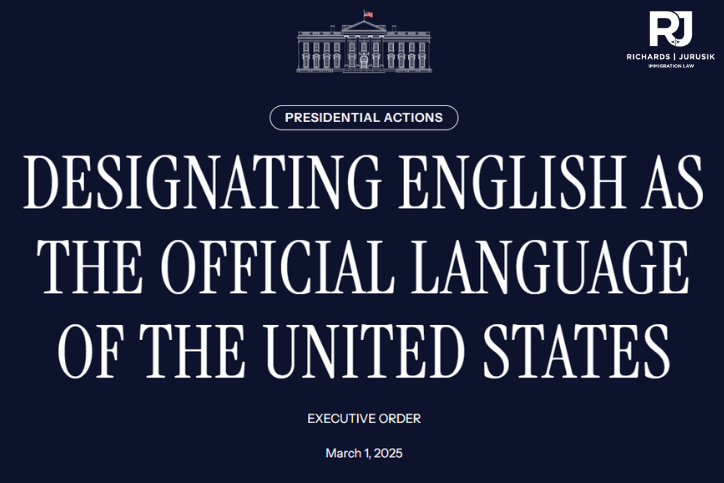
The U.S. Supreme Court has issued a major immigration and constitutional law decision, ruling that children born in the United States to parents who are unlawfully present or temporarily present in the country are U.S. citizens at birth. The decision rejects President Trump’s Executive Order No. 14160, which attempted to limit birthright citizenship for children born to certain noncitizen parents.
In a 6-3 decision, the Court struck down the executive order and reaffirmed the long-standing interpretation of the Fourteenth Amendment’s Citizenship Clause.
What Was the Executive Order About?
President Trump’s order sought to deny U.S. citizenship to certain children born in the United States if their parents were:
- Unlawfully present in the United States, or
- Temporarily present in the United States, including certain visa holders.
The order argued that these children were not “subject to the jurisdiction” of the United States under the Fourteenth Amendment and therefore were not automatically U.S. citizens.
What Did the Supreme Court Decide?
The Supreme Court rejected that interpretation.
Chief Justice John Roberts, writing for the Court, held that the Fourteenth Amendment broadly protects birthright citizenship for those born in the United States, subject only to narrow historical exceptions. The Court affirmed the lower court’s judgment blocking the executive order. The Court emphasized that birthright citizenship has long been understood to apply to individuals born on U.S. soil, with limited exceptions such as children of foreign diplomats or enemy forces during hostile occupation. Justice Kavanaugh, while disagreeing with part of the constitutional reasoning, agreed that federal law currently provides broad birthright citizenship and that the executive order exceeded what Congress has authorized.
Why the Fourteenth Amendment Matters
The Fourteenth Amendment states:
“All persons born or naturalized in the United States, and subject to the jurisdiction thereof, are citizens of the United States…” The dispute focused on the phrase “subject to the jurisdiction thereof.”
The government argued that children of undocumented or temporary-status parents did not fall within that phrase. The Court disagreed, relying on the long-standing understanding that birth in the United States generally confers citizenship, with only limited exceptions.
What This Means for Immigrant Families
For immigrant families, the decision provides significant clarity.
Children born in the United States remain U.S. citizens at birth even if their parents are:
- Undocumented,
- In temporary status,
- Students,
- Visitors,
- Workers, or
- Applicants for permanent residence.
The AP reported that the proposed restriction would also have affected people lawfully present in the United States, including students and green card applicants.
What This Means for Temporary Visa Holders
The ruling is especially important for families in the United States on temporary visas, such as:
- F-1 students
- H-1B workers
- L-1 employees
- TN professionals
- E-1/E-2 treaty visa holders
- Visitors and other nonimmigrant categories
Under the Supreme Court’s decision, children born in the United States to parents in these statuses continue to receive U.S. citizenship at birth.
Could Congress Change Birthright Citizenship?
This means the President cannot unilaterally change birthright citizenship by executive order alone. Congress also does not have the ability to amend the constitution on its own and any change done by congressional action would face significant constitutional challenges. To ensure lasting change to birthright citizenship would require an amendment to the constitution which currently does not have broad support across the nation.
Key Takeaways
- The Supreme Court rejected Trump’s proposed limits on birthright citizenship.
- Children born in the United States generally remain U.S. citizens at birth.
- The ruling applies even when parents are undocumented or temporarily present.
- The President cannot unilaterally rewrite birthright citizenship rules by executive order.
- Any future change would require an amendment to the constitution.
Final Thoughts
The Supreme Court’s decision reaffirms one of the most important principles of U.S. citizenship law: birth on U.S. soil generally confers U.S. citizenship. For immigrant families, temporary visa holders, and employers with foreign national workers in the United States, the ruling provides important certainty.
While the debate over birthright citizenship may continue politically, this decision confirms that the long-standing rule remains in place.
Citation
Schedule a Consultation with an Immigration Lawyer
We Can Help!
If you have questions regarding U.S. Immigration, we invite you to contact our team at Richards and Jurusik for detailed guidance and assistance. We aim to provide the most accurate and up-to-date information to make your immigration process smoother and less stressful. The immigration lawyers at Richards and Jurusik have decades of experience helping people to work and live in the United States. Please read some of our hundreds of 5-star client reviews! Contact us today to assess your legal situation.
BRANDON BEASLEY is a Associate Attorney at Richards and Jurusik who focuses his practice exclusively on U.S. and Canadian immigration law. He advises individuals, families, professionals, and businesses on employment-, investment-, and family-based immigration matters, while also assisting U.S. citizens with Canadian criminal inadmissibility, Temporary Resident Permits, and Criminal Rehabilitation applications. (Full Bio)