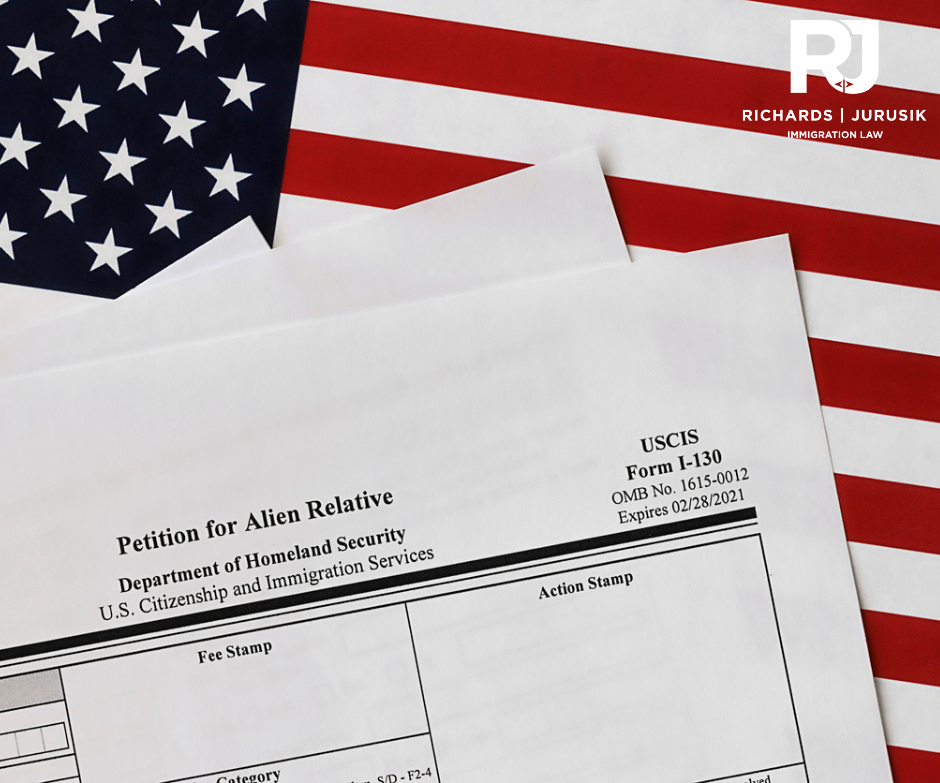
Filing Form I-130, Petition for Alien Relative, is the first step for many U.S. citizens and lawful permanent residents (LPRs) to sponsor a family member for a green card. While the form itself may appear straightforward, even small errors can lead to frustrating processing delays, and may result in a Request for Evidence (RFE) or outright denial. If you’re preparing to submit an I-130 or have one pending, understanding the most common pitfalls can save months of time and stress.
Top 5 I-130 Mistakes That Cause Processing Delays
1. Incomplete or Incorrect Information
Leaving required fields blank or providing inaccurate details such as the wrong name, date of birth, or immigration status, can cause USCIS to issue an RFE or reject the form entirely. It’s essential to match all biographical details with official documents like birth certificates and passports.
Pro tip: Double-check that names are spelled consistently across documents and match the format USCIS expects (e.g., full legal name without abbreviations).
2. Missing Evidence of U.S. Citizenship or Lawful Permanent Residence
Sponsors must prove they are either U.S. citizens or green card holders. Failing to include a copy of your U.S. passport, birth certificate, naturalization certificate, or green card is a guaranteed way to delay your petition.
Reminder: A driver’s license is not proof of immigration status.
3. Failure to Submit the Correct Filing Fee or Form Version
USCIS periodically updates its forms and fees. Submitting the outdated version or using the wrong payment method can lead to a rejection, meaning your petition will not be processed.
Recent change: USCIS now requires separate payments for each filing fee when submitting multiple forms together. Payment by check is no longer accepted. Applicants must use form G-1450 or G-1650 to process payments.
4. Lack of Relationship Evidence
For marriage-based petitions, especially, not submitting enough evidence of a bona fide marriage is a common issue. Photos, joint financial documents, affidavits from friends or family, and travel records can all help demonstrate a legitimate relationship.
Note: Petitions for siblings or parents also require proof of the familial relationship, such as birth certificates showing shared parents.
5. Incorrect or Missing Signatures
Every page requiring a signature must be properly signed in ink (if filing by mail). Digital signatures are only allowed in specific online filings. Missing a signature will result in USCIS rejecting the entire package.
Tip: Always check that both the petitioner and preparer (if applicable) have signed their respective sections.
Conclusion
The I-130 petition sets the foundation for family-based immigration to the United States. A simple oversight can mean months of delay, or worse, denial. Take the time to review your form, gather complete evidence, and check for the most current instructions and fees. If you’re unsure, consulting with an immigration attorney can provide clarity and peace of mind.
Key Takeaway: Avoid delays by ensuring the I-130 is accurate, complete, and properly supported; small errors can have big consequences.
Sources
- USCIS Form I-130, Petition for Alien Relative
- USCIS Filing Fees and Payment Instructions
- USCIS News Release on Separate Payments Requirement
- USCIS Evidence Requirements for Family-Based Petitions
Schedule a Consultation with an Immigration Lawyer
We Can Help!
If you have questions regarding family-based immigration or immigration forms, we invite you to contact our team at Richards and Jurusik for detailed guidance and assistance. We aim to provide the most accurate and up-to-date information to make your immigration process smoother and less stressful. The immigration lawyers at Richards and Jurusik have decades of experience helping people to work and live in the United States. Please read some of our hundreds of 5-star client reviews! Contact us today to assess your legal situation.

REBECCA KROLL is an Associate Attorney at Richards and Jurusik who practices exclusively in U.S. immigration law, focusing on both business and family-based immigration. She assists clients with employment-based visas, marriage and family cases, and the U.S. citizenship process. (Full Bio)