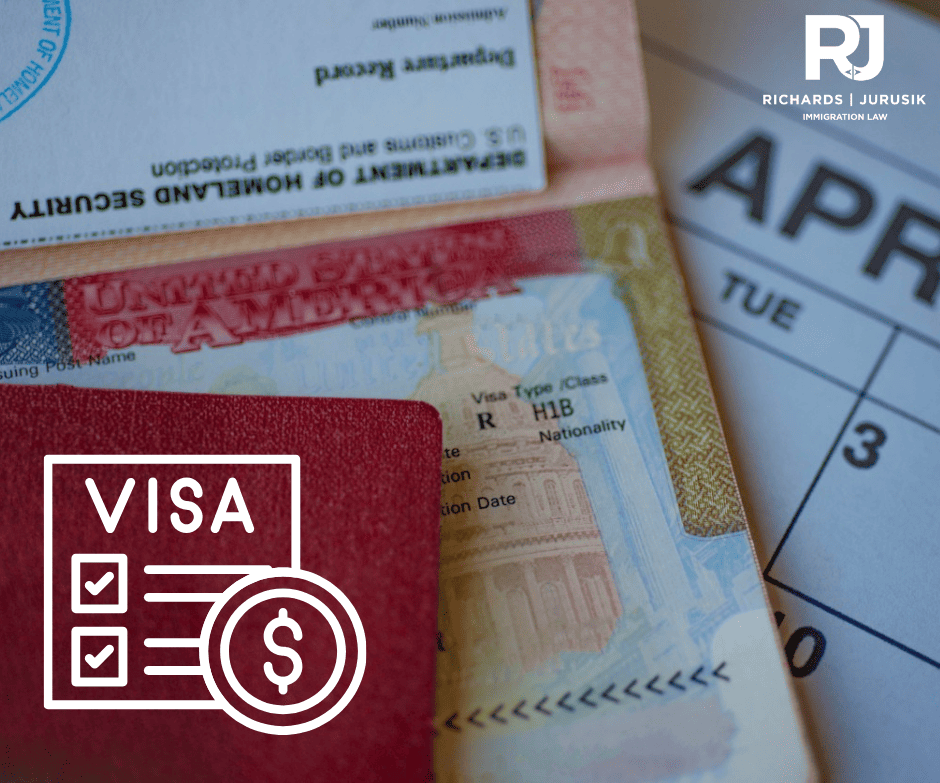
The H-1B visa process can be expensive. Filing fees, legal costs, and compliance obligations often total several thousand dollars per petition. Understandably, employers may wonder whether they can legally recoup any of these costs by lowering an employee’s salary or requiring repayment. The short answer is no, employers cannot offset H-1B costs through wage reductions or reimbursement agreements, even if the employee “agrees” to it.
The Legal Framework: Employer’s Sole Responsibility
Under U.S. Department of Labor (DOL) and U.S. Citizenship and Immigration Services (USCIS) regulations, H-1B visa sponsorship costs are the sole responsibility of the employer. Federal law explicitly prohibits employers from passing along H-1B–related costs to the employee when doing so would reduce the employee’s required wage below the actual wage or prevailing wage, whichever is higher.
These rules are found in:
- 20 C.F.R. §655.731(c)(9) – Wage obligations under the H-1B program
- 8 C.F.R. §214.2(h)(4)(iii)(B)(2) – Employer’s financial obligations
In essence, the employer must bear all costs that are considered “employer’s business expenses.” That includes:
- USCIS filing fees
- Attorney fees for preparing and filing the petition
- Recruitment or advertising expenses (if required)
- Any premium processing or administrative fees paid to speed up the process
What About Agreements or “Reimbursements”?
Even if an employee voluntarily offers to pay or signs an agreement to reimburse the employer if they leave early or are not selected in the lottery, this arrangement is still unlawful if it effectively reduces their required wage.
For example:
- An employer cannot deduct or “recoup” $100,000 (or any portion) in fees from the employee’s paycheck.
- An employer cannot lower the salary to “offset” those costs.
- An employer cannot require the employee to pay back the filing or legal fees if they leave the company before a certain date.
Such practices may lead to serious penalties, including:
- Back wage orders
- Civil monetary fines
- Debarment from the H-1B program
What Costs Can Employees Pay?
There are only a few optional costs that may legally be paid by the employee, but these must be voluntary and unrelated to the employer’s obligations:
- Dependent visa fees (for spouse or children)
- Premium processing fees, if the employee requests faster adjudication for personal reasons (e.g., urgent travel)
- Certain relocation expenses, if agreed upon separately
However, employers must still ensure that these payments do not reduce the employee’s effective wage below the required level.
Bottom Line
Even if an employee “agrees” to repay H-1B fees or take a lower salary to offset costs, it remains illegal under federal immigration and labor law. The government treats such arrangements as wage violations, and they can trigger audits, fines, and future sponsorship bans.
Employers should budget for the full cost of H-1B sponsorship as a business expense, not a recoverable investment.
Recommended Employer Practices
- Treat all H-1B filing and legal fees as non-reimbursable employer expenses.
- Clearly outline any voluntary, employee-initiated expenses in writing (e.g., premium processing).
- Maintain payroll documentation showing compliance with the prevailing wage requirement.
- Consult immigration counsel before drafting any repayment agreements or employment contracts involving H-1B workers.
Schedule a Consultation with an Immigration Lawyer
We Can Help!
If you have questions regarding a U.S. immigration matter, we invite you to contact our team at Richards and Jurusik for detailed guidance and assistance. We aim to provide the most accurate and up-to-date information to make your immigration process smoother and less stressful. The immigration lawyers at Richards and Jurusik have decades of experience helping people to work and live in the United States. Please read some of our hundreds of 5-star client reviews! Contact us today to assess your legal situation.

JEREMY L. RICHARDS is the founding partner of Richards and Jurusik and has dedicated his career to U.S. immigration law, with a specialized focus on assisting Canadian and Mexican citizens under the United States-Mexico-Canada Agreement (USMCA) to work and live in the United States. (Full Bio)