You may be thinking about getting engaged, finding an apartment together, or planning a wedding around the school calendar. But when your boyfriend or girlfriend is an international student, another question comes up:
What will marriage mean for their ability to stay in Utah?
Marriage may open a path to permanent residence when one spouse is a U.S. citizen or lawful permanent resident. But getting married does not automatically give an international student a green card, unrestricted permission to work, or permission to remain in the United States indefinitely. The marriage and the immigration application are separate legal steps.
The right next step depends on your immigration status, your partner’s immigration history, and your plans for school, employment, and travel. This article focuses primarily on students in F-1 status, the classification used for academic study. Students with a current or previous J-1 exchange visitor history may face additional requirements, discussed below.
Can an International Student Get Married While Studying in Utah?
Generally, yes. An international student can enter a legally valid marriage. For a marriage-based immigration case, USCIS requires a qualifying marriage that is legally recognized and genuine, meaning you intended to build a life together, not enter a marriage to evade immigration law.
Getting married does not, by itself, replace your partner’s F-1 status. A student who continues relying on F-1 status must still comply with the applicable enrollment, employment, and other student requirements. Do not assume that the wedding makes those requirements disappear.
Whether you are planning to live in Provo, Salt Lake City, Logan, or elsewhere in Utah, it helps to separate two questions: Are we ready to marry? And what immigration steps are available after we do?
The First Question: Are You a U.S. Citizen or a Green Card Holder?
Your status makes a significant difference.
When you are a U.S. citizen
Your spouse is generally considered an immediate relative under immigration law. This category is not subject to the annual visa-number limits that apply to some other family categories.
A spouse who was inspected and admitted or paroled into the United States may be eligible to adjust status and apply for a green card without leaving the country. However, admission alone is not enough. Your spouse must satisfy the other eligibility requirements, including admissibility and any applicable exceptions or waivers.
When you are a lawful permanent resident
You can generally petition for your spouse, but the case falls within the F2A family-preference category. Visa availability matters, and rules on maintaining lawful status are generally stricter than for spouses of U.S. citizens. Do not assume that your spouse can file a green-card application immediately or remain in the United States simply because you filed a marriage petition. Check the applicable Visa Bulletin and USCIS filing chart.
When neither of you is a U.S. citizen or permanent resident
For example, two international students do not obtain green cards simply by marrying. Depending on your circumstances, a dependent status or another immigration pathway might be relevant, but marriage alone does not create eligibility for the ordinary citizen- or permanent-resident-sponsored spouse categories.
Does My Spouse Need to Leave the United States to Apply?
Not necessarily. An eligible student may be able to complete adjustment of status through USCIS while remaining in the United States. In an eligible immediate-relative case, Form I-130 and Form I-485 can generally be filed together.
The principal filings generally include Form I-130, which establishes the qualifying family relationship, Form I-130A, which provides information about the spouse, and Form I-485, the application for permanent residence. Financial sponsorship documents and the required immigration medical examination are also part of the process. Current USCIS instructions require applicants who need Form I-693 medical documentation to submit it with Form I-485.
When adjustment of status is unavailable or another approach is appropriate, consular processing may be considered. That means completing the immigrant visa process through a U.S. embassy or consulate abroad. For a U.S. citizen’s spouse, this generally involves the CR-1 or IR-1 immigrant visa route – not a fiancé visa after the marriage.
Leaving the country can have consequences of its own, so do not book a departure simply because someone tells you that all international students must apply from abroad.
Can My Spouse Stop Attending School After We Marry?
Not simply because you got married. To maintain F-1 status, your spouse generally must continue a full course of study or qualify for an authorized exception. Dropping classes, taking a semester off, or withdrawing without the appropriate authorization can create a status problem. Speak with the school’s designated school official, or DSO, before changing enrollment.
A pending green-card application requires a more careful distinction. USCIS generally treats the period during which a properly filed adjustment application is pending as a period of authorized stay for unlawful-presence purposes. But that is not the same as maintaining F-1 status, and it does not automatically protect someone from removal. A pending or approved I-130 petition alone does not grant lawful immigration status.
Before deciding to rely on a pending adjustment application rather than continue maintaining F-1 status, discuss the consequences with an immigration attorney and coordinate any school-record changes with the DSO.
What about graduation?
Treat graduation, the end of authorized practical training, and any applicable departure or filing deadlines as separate planning dates. A wedding does not extend those deadlines. Review your spouse’s Form I-20, immigration records, and available options well before the program or training period ends.
Can My Spouse Work After We Get Married?
Marriage does not provide unrestricted employment authorization. Neither does filing Form I-485 by itself. Your spouse may already have permission for certain work through F-1 status, such as qualifying on-campus employment or authorized practical training. Optional Practical Training, or OPT, is employment authorization tied to the student’s field of study and its own eligibility requirements. Marriage does not remove those restrictions.
An eligible adjustment applicant can generally request a separate Employment Authorization Document, or EAD, using Form I-765. Until the appropriate authorization is effective, your spouse should work only under an existing, valid basis for employment.
For example, an international student should not accept an unrelated off-campus job merely because the wedding has occurred or a green-card application has been submitted. Likewise, a pending marriage case is not, by itself, permission to keep working after OPT authorization ends. Before switching to adjustment-based employment authorization, review how the change affects the student’s F-1 position.
Can We Travel Abroad for Our Honeymoon or Visit Family?
Review international travel before buying tickets. The answer can change once you file immigration paperwork. An F-1 student seeking a new student visa or admission must meet the requirements for that temporary classification, including the applicable intent-to-depart requirement. Immigration plans can complicate that assessment. Do not treat an existing student visa as a guaranteed way to return after marriage or filing a green-card case.
After you file Form I-485, leaving the United States without first obtaining required advance parole, advance permission to seek return while the case is pending, generally causes USCIS to treat the adjustment application as abandoned. F-1 status is not one of the narrow status-based exceptions to this rule.
Even approved advance parole does not guarantee reentry or eliminate every immigration risk. A history of unlawful presence, for example, can create additional problems when someone departs. Your spouse’s history and the rules in effect at the time of travel need individual review. This applies to a short family visit or honeymoon as well as a longer trip.
Is There a “90-Day Rule” About Getting Married?
You may encounter advice saying that an international student should “wait 90 days” before marrying or applying for a green card. No universal waiting period makes a case safe or cures an earlier misrepresentation.
Immigration officials can examine what your partner intended and represented when applying for a visa or entering the United States. Developing a relationship and genuinely changing plans is different from making a material false statement to obtain a visa or admission. Timing can be relevant, but it is not the entire analysis.
The State Department has a 90-day framework for evaluating certain conduct in its own adjudications. USCIS does not apply that framework as a binding rule. Neither marrying before day 90 nor waiting until afterward answers the underlying question on its own. Give your attorney the complete timeline, including recent trips abroad and reentries, not just the date your partner first came to college.
What If We Are Both Students and Do Not Earn Much?
Financial sponsorship deserves attention early, especially when you are balancing tuition, part-time employment, and family support.
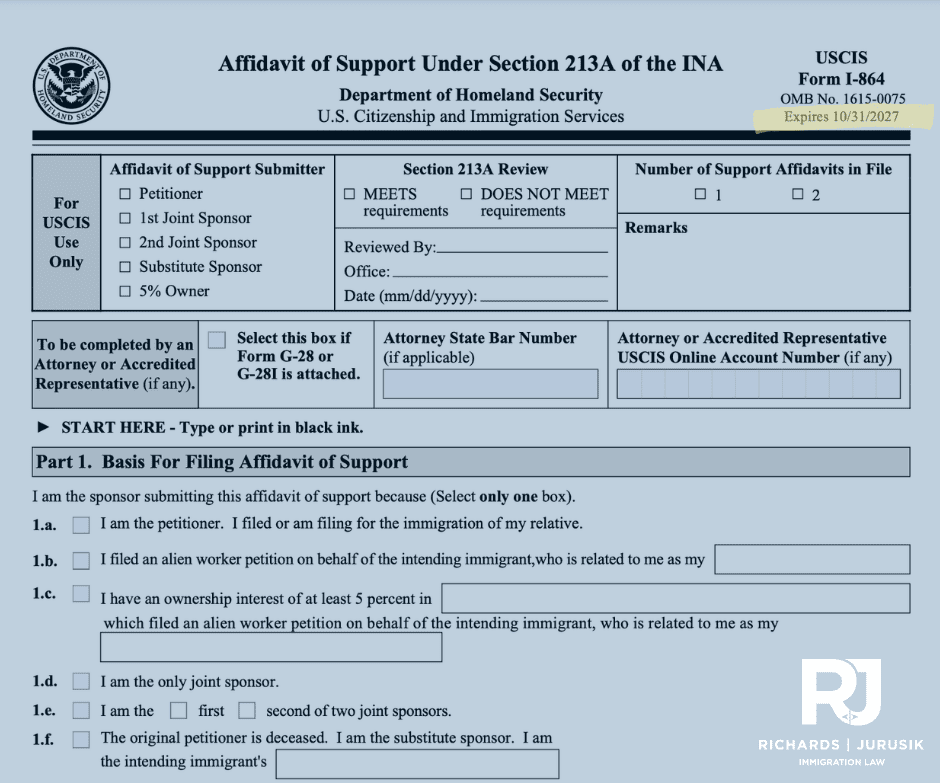
Most marriage-based cases require Form I-864, Affidavit of Support. The usual income standard is at least 125% of the applicable Federal Poverty Guidelines, based on the sponsor’s household size, although exceptions apply. Qualifying assets or an eligible joint sponsor may help if income is insufficient.
A parent may qualify as a joint sponsor, but willingness alone is not enough: they must meet the applicable requirements. The petitioning spouse generally still submits their own affidavit. Sponsorship is a legally enforceable financial commitment, not merely a letter offering the couple a place to live.
Include sponsorship in your planning before assuming that a marriage-based application is financially ready to file.
How Do We Prove Our Marriage Is Genuine?
USCIS evaluates whether you intended to establish a life together when you married. A legally valid wedding certificate is necessary evidence of the marriage, but you also need evidence of the relationship itself.
Depending on your circumstances, useful records may include a shared lease, combined financial records, photographs, communications, and statements from people with firsthand knowledge of your relationship. USCIS recognizes several kinds of evidence; the goal is to document your actual marriage and ongoing relationship. For a student couple, that may mean explaining student housing arrangements, living with relatives, or why your finances are still limited. Focus on a clear, truthful account rather than trying to make your situation resemble that of a couple married for many years.
What If My Partner Has a Status Problem or Previously Held J-1 Status?
Don’t assume marriage fixes every immigration issue. Certain adjustment-of-status bars involving failure to maintain status or unauthorized employment do not apply to immediate relatives of U.S. citizens. However, these exceptions do not permit violations of status, and they do not eliminate separate eligibility or admissibility problems. The same exceptions generally are not available merely because someone marries a permanent resident.
A current or previous J-1 exchange visitor history requires separate review. Some J-1 participants are subject to a two-year home-country physical-presence requirement. Those who remain subject generally must satisfy that requirement or obtain a waiver before adjustment of status or immigrant visa issuance. Marriage to a U.S. citizen does not itself waive it.
Bring any prior visa refusals, immigration notices, employment issues, arrests, or changes of status to your attorney’s attention before filing or traveling.
How Long Will the Process Take, and What Happens After Approval?
No single reliable timeline applies to every student marriage case. USCIS processing estimates vary by application category and office, and reflect past case completions rather than a guaranteed decision date. Plan school, work, housing, and travel around your actual authorizations, not an assumed approval month.
When permanent residence is based on a marriage that is less than two years old on the date permanent residence is granted, the spouse generally receives conditional permanent residence and a two-year green card. For adjustment cases, the relevant date is approval – not the filing date.
To remove those conditions, you must file Form I-751. You generally must file a joint petition within the 90 days immediately before conditional residence expires. Individual filings or waivers may be available in qualifying circumstances.
Plan Your Marriage and Immigration Steps Together
You do not need to have every part of your future figured out before getting engaged. But before changing classes, accepting a job, planning international travel, or relying on a marriage-based application to remain in Utah, understand how those decisions fit together. A consultation can help you identify the available pathway, evaluate your partner’s immigration history, and coordinate the application with graduation and your plans as a couple. Schedule a consultation to discuss marriage-based immigration in Utah and understand your options before changing your school, work, or travel plans.
Schedule a Consultation with an Immigration Lawyer
Sources:
- https://www.uscis.gov/policy-
manual/volume-6-part-b- chapter-6? - https://www.uscis.gov/green-
card/green-card-eligibility/ green-card-for-immediate- relatives-of-us-citizen? - https://travel.state.gov/
content/travel/en/us-visas/ immigrate/family-immigration/ immigrant-visa-for-spouse.html ?
We can Help
If you’re dating or planning to marry an international student in Utah, Richards and Jurusik can help you understand your immigration options. With decades of experience and over 13,000 successful U.S. immigration cases, our attorneys assist couples with F-1 student status considerations, marriage-based green cards, adjustment of status, and family immigration. Please read some of our hundreds of 5-star client reviews! Contact us today to assess your legal situation.

JEREMY L. RICHARDS is the founding partner of Richards and Jurusik and has dedicated his career to U.S. immigration law, with a specialized focus on assisting Canadian and Mexican citizens under the United States-Mexico-Canada Agreement (USMCA) to work and live in the United States. (Full Bio)