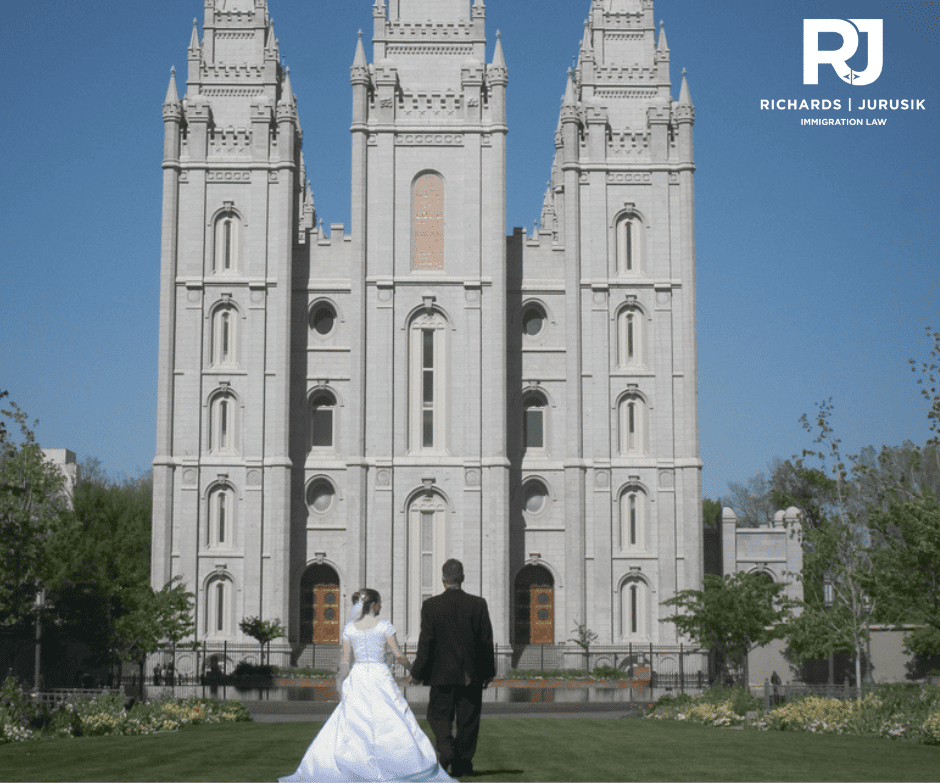
Yes – a temple marriage can count for U.S. immigration purposes when it creates a legally valid marriage under the law where it takes place. A religious ceremony does not prevent a marriage from qualifying. However, a temple sealing that follows an existing legal marriage serves a different role: the couple is already legally married.
For members of The Church of Jesus Christ of Latter-day Saints planning an international marriage, the key questions are whether the marriage is legally recognized, when that legal marriage began, and which documents establish it. USCIS generally follows the law of the place where the marriage was celebrated, subject to additional federal requirements.
When Does a Utah Temple Marriage Qualify?
Utah allows an adult authorized by a religious denomination to solemnize a marriage. Couples must also satisfy the applicable marriage requirements, including obtaining a marriage license. The officiant must return the completed license and marriage certificate to the issuing county clerk.
A temple wedding performed in compliance with these requirements can therefore establish a legal marriage that may support a marriage-based immigration petition. A separate courthouse wedding is generally unnecessary when the temple ceremony itself creates the legal marriage.
For example, if a U.S. citizen and a foreign national marry in a Utah temple using a valid marriage license and an authorized officiant, the religious setting does not disqualify their marriage from immigration recognition.
What If You Marry Civilly Before Your Temple Sealing?
Some couples complete a civil marriage first and are sealed in a temple later. The Church recognizes this sequence, including in countries where local law requires a civil marriage before a temple sealing. In that situation, the date the legal marriage took effect generally controls for immigration purposes, rather than the later sealing date.
For example:
| Event | Date | Immigration Significance |
|---|---|---|
| Legally valid civil marriage | June 10 | Establishes the legal marriage |
| Later temple sealing | August 20 | Does not ordinarily change the original legal marriage date |
When completing immigration forms, use the legal marriage date reflected in the appropriate marriage record. If your documents show different dates, explain the sequence clearly. This distinction can also affect conditional permanent residence. A spouse generally receives conditional residence if the marriage is less than two years old when permanent resident status is granted.
Is a Temple Sealing Certificate Enough for USCIS?
Do not assume that a religious sealing certificate replaces the required legal marriage documentation.
For a marriage-based Form I-130 petition, couples generally submit the marriage certificate and evidence that any prior marriages legally ended. For a Utah marriage, obtaining a certified copy of the recorded marriage document from the issuing county clerk is a practical starting point.
A temple sealing record may provide additional context, particularly when explaining two ceremony dates. Its role depends on whether it also qualifies as the legally recognized marriage document.
For marriages abroad, check the State Department’s country-specific civil document guidance. The proper issuing authority and acceptable marriage record vary by country.
What About a Temple Marriage Outside the United States?
A temple marriage abroad may qualify if it is legally valid under the law where it occurred and satisfies the applicable U.S. immigration requirements.
The important question is whether the ceremony created a legal marriage in that jurisdiction. In some countries, couples must complete a separate civil marriage. A religious ceremony alone may not establish the legal relationship needed for a spousal petition.
Before an overseas wedding, confirm:
- Whether the temple ceremony itself creates a legal marriage.
- Whether a separate civil ceremony or registration is required.
- Which authority issues the recognized marriage document.
- Which documents and translations the immigration process requires.
The State Department’s document guidance is a useful starting point, but questions about local marriage validity may require advice from someone qualified in that country’s law.
Does a Temple Marriage Automatically Qualify Your Spouse for a Green Card?
No. A legally valid marriage establishes the marital relationship, but the foreign spouse must still qualify for the requested immigration benefit.
Depending on the circumstances, the next step may involve:
- Consular processing: Applying for an immigrant visa through a U.S. embassy or consulate abroad.
- Adjustment of status: Applying for permanent residence from within the United States, if eligible.
Entry history, immigration violations, admissibility, financial sponsorship, and other requirements may affect the case. A temple marriage does not waive those requirements or automatically authorize employment.
Can We Have a Temple Wedding While a K-1 Visa Is Pending?
A K-1 fiancé visa is intended for an unmarried foreign fiancé coming to the United States to marry the U.S. citizen petitioner. If a temple wedding creates a legal marriage before K-1 admission, the couple generally cannot continue using the fiancé visa pathway on the basis that they remain unmarried. They should review the appropriate spousal immigration process before proceeding.
After admission on a K-1 visa, a legally valid temple marriage to the petitioning U.S. citizen can satisfy the marriage requirement if it occurs within 90 days. If the couple legally marries civilly within that period and schedules the sealing later, the legal marriage is the relevant event for that deadline. Review the immigration consequences before scheduling any ceremony while a fiancé visa case is pending.
Do We Still Need Evidence That Our Marriage Is Genuine?
Yes. Legal validity and a genuine marital relationship are separate issues.
USCIS asks for evidence of a bona fide marriage – a marriage entered into in good faith. Depending on your circumstances, supporting records may include:
- A shared lease or jointly owned property.
- Combined financial records.
- Birth certificates of children you have together.
- Statements from people with personal knowledge of your relationship.
- Other records showing an ongoing marital relationship.
A temple marriage should be documented alongside the rest of your relationship. Organize evidence that reflects your actual circumstances, including an explanation if immigration processing or school commitments keep you living in different countries.
Planning a Temple Marriage With a Foreign National
Before setting wedding and travel dates, identify which ceremony will establish your legal marriage and how you will document it. Then review the immigration pathway that fits your situation. For Utah couples, a pre-wedding consultation can clarify the marriage date, required records, fiancé visa implications, and next steps toward living together in the United States.
Schedule a Consultation with an Immigration Lawyer
Source:
- https://www.uscis.gov/family/
bring-spouse-to-live-in-US - https://www.uscis.gov/family/
family-of-us-citizens/visas- for-fiancees-of-us-citizens
We can Help
If you have questions about LDS temple marriages, civil marriage and temple sealing dates, marriage-based green cards, K-1 fiancé visas, or sponsoring a foreign spouse for permanent residence, contact Richards and Jurusik for detailed guidance and assistance. Our immigration lawyers have decades of experience helping Utah couples and international families navigate marriage-based immigration, spouse visas, and adjustment of status. Please read some of our hundreds of 5-star client reviews! Contact us today to assess your legal situation.

JEREMY L. RICHARDS is the founding partner of Richards and Jurusik and has dedicated his career to U.S. immigration law, with a specialized focus on assisting Canadian and Mexican citizens under the United States-Mexico-Canada Agreement (USMCA) to work and live in the United States. (Full Bio)