
Understanding the Bars to Adjustment: An Overview

Bars to Adjustment

Adjustment of Status and the “Bars to Adjustment” (Including When a Waiver May Be Required)

Adjustment of Status (AOS) under INA § 245(a) allows certain noncitizens who are already in the United States to apply for lawful permanent residence (a green card) without leaving the country. While this process is highly beneficial, not everyone qualifies. Applicants must meet strict eligibility requirements and avoid specific legal restrictions known as the “bars to adjustment.” In addition, even if someone is eligible to adjust status, they must also be admissible to the United States, or qualify for a waiver of inadmissibility.

This blog explains:

  • Who qualifies for adjustment of status
  • The statutory bars to adjustment under INA § 245(c)
  • Common exceptions to those bars
  • When an immigration waiver may be required

Basic Eligibility Requirements Under INA § 245(a)

To adjust status in the United States, an applicant generally must:

  • Have been inspected and admitted or inspected and paroled into the United States
  • Be physically present in the United States at the time of filing
  • Properly file Form I-485 with the correct fee and supporting documentation
  • Have an approved immigrant petition (unless filing concurrently)
  • Have an immigrant visa immediately available at filing and at approval
  • Be admissible to the United States or eligible for a waiver
  • Merit a favorable exercise of discretion

The requirement of being “inspected and admitted or paroled” is critical. Individuals who entered without inspection (EWI) are generally not eligible to adjust status unless they qualify under a special provision such as INA § 245(i), parole in place, or certain statutory exceptions.


Bars to Adjustment of Status (INA § 245(c))

Even if someone meets the basic requirements above, they may still be barred from adjusting status under INA § 245(c). These bars apply to individuals who entered in certain categories or violated immigration laws in specific ways.

1. Crewman Bar – INA § 245(c)(1)

Individuals who last entered the United States as crewmen are generally barred from adjusting status.

Possible Exceptions:

  • VAWA-based applicants
  • Applicants grandfathered under INA § 245(i)

This is typically not a waiver issue but rather a statutory eligibility issue.

2. Unlawful Status, Failure to Maintain Status, or Unauthorized Employment – INA § 245(c)(2)

This bar applies to individuals who:

  • Are in unlawful immigration status at the time of filing, or
  • Failed to continuously maintain lawful status since entry, or
  • Engaged in unauthorized employment prior to filing

Major Exceptions:

  • Immediate relatives of U.S. citizens (spouses, parents, and unmarried children under 21)
  • VAWA-based applicants
  • Certain special immigrants
  • Employment-based applicants eligible under INA § 245(k)

Immediate relatives are often exempt from this bar, making adjustment possible despite overstays or unauthorized employment.

3. Transit Without a Visa (TWOV) – INA § 245(c)(3)

Applicants admitted in transit without a visa are generally barred from adjustment.

Exception: VAWA-based applicants.

4. Visa Waiver Program (ESTA) Entrants – INA § 245(c)(4)

Individuals admitted under the Visa Waiver Program are generally restricted from adjusting status.

Key Exception:

  • Immediate relatives of U.S. citizens may adjust status despite VWP entry.
  • VAWA-based applicants are also exempt.

These cases require careful handling due to the waiver of certain rights under the Visa Waiver Program.

5. Witness or Informant Visa Holders – INA § 245(c)(5)

Individuals admitted in certain witness or informant classifications are barred from adjustment unless a statutory exception applies.

6. Terrorism-Related Grounds – INA § 245(c)(6)

Applicants deportable for involvement in terrorist activities are barred from adjustment. These cases are highly complex and often involve limited waiver availability.

7. Employment-Based Applicants Not in Lawful Status – INA § 245(c)(7)

Employment-based applicants who are not in lawful nonimmigrant status at filing are barred.

Exception: INA § 245(k) may forgive up to 180 days of status violations or unauthorized employment since the applicant’s most recent lawful admission.

8. Other Status Violations or Unauthorized Employment – INA § 245(c)(8)

This bar applies to individuals who have violated the terms of their nonimmigrant status or have ever engaged in unauthorized employment.

Exemptions may apply to:

  • Immediate relatives
  • VAWA-based applicants
  • Certain special immigrants
  • Eligible employment-based applicants under INA § 245(k)

Important: Bars to Adjustment vs. Grounds of Inadmissibility

Even if an applicant qualifies for an exception to a bar to adjustment, they must still be admissible under INA § 212(a). If inadmissible, a waiver may be required.

This distinction is critical:

  • Bars to adjustment affect eligibility to file or approve the I-485.
  • Grounds of inadmissibility determine whether the applicant may receive permanent residence.

When an Immigration Waiver May Be Required

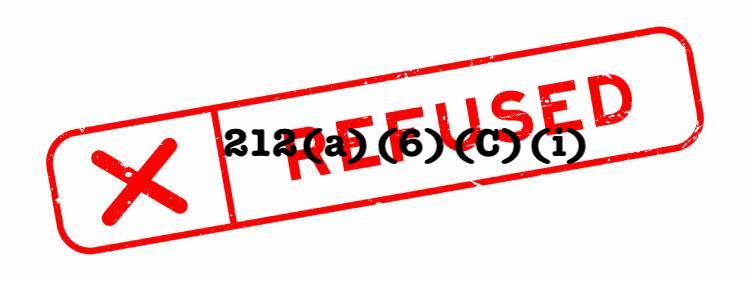
1. Fraud or Misrepresentation – INA § 212(a)(6)(C)(i)

If an applicant committed fraud or willfully misrepresented a material fact to obtain an immigration benefit, they may be inadmissible.

Possible Waiver: Form I-601 under INA § 212(i), typically requiring a showing of extreme hardship to a qualifying relative.

2. Unlawful Presence Bars (3-Year / 10-Year) – INA § 212(a)(9)(B)

These bars are triggered after departure from the United States following unlawful presence.

Possible Waivers:

  • Form I-601A (Provisional Unlawful Presence Waiver)
  • Form I-601 (after consular processing)

3. Prior Removal or Deportation – INA § 212(a)(9)(A)

Individuals previously removed may need permission to reapply.

Required Filing: Form I-212 (Permission to Reapply for Admission).

4. Criminal Grounds – INA § 212(a)(2)

Certain criminal convictions may render an applicant inadmissible.

Possible Waiver: Form I-601 under INA § 212(h), depending on the offense and eligibility.

5. Smuggling – INA § 212(a)(6)(E)

Assisting someone in entering the United States unlawfully may create inadmissibility. Limited family-based waivers may be available.

6. False Claim to U.S. Citizenship – INA § 212(a)(6)(C)(ii)

This ground is extremely serious and has very limited waiver availability.


Conclusion

Adjustment of status is a powerful pathway to lawful permanent residence, but it requires careful analysis. Applicants must:

  • Meet INA § 245(a) eligibility requirements
  • Avoid or qualify for exemptions to INA § 245(c) bars
  • Be admissible under INA § 212(a), or qualify for a waiver

Because the difference between a statutory bar and a ground of inadmissibility can determine whether a waiver is required, and which waiver form to file, professional legal guidance is strongly recommended.

Every case is fact-specific. A thorough review of entry history, prior immigration violations, employment history, criminal background, and previous filings is essential before submitting an adjustment of status application.

Schedule a Consultation with an Immigration Lawyer

Citations

We Can Help!

You may have questions regarding U.S. immigration laws and visas. We invite you to contact our team at Richards and Jurusik for detailed guidance and assistance. We aim to provide the most accurate and up-to-date information to make your immigration process smoother and less stressful. The immigration lawyers at Richards and Jurusik have decades of experience helping people to work and live in the United States. Read some of our hundreds of 5-star client reviews! Contact us today to assess your legal situation.

Contact Us

Similar Posts